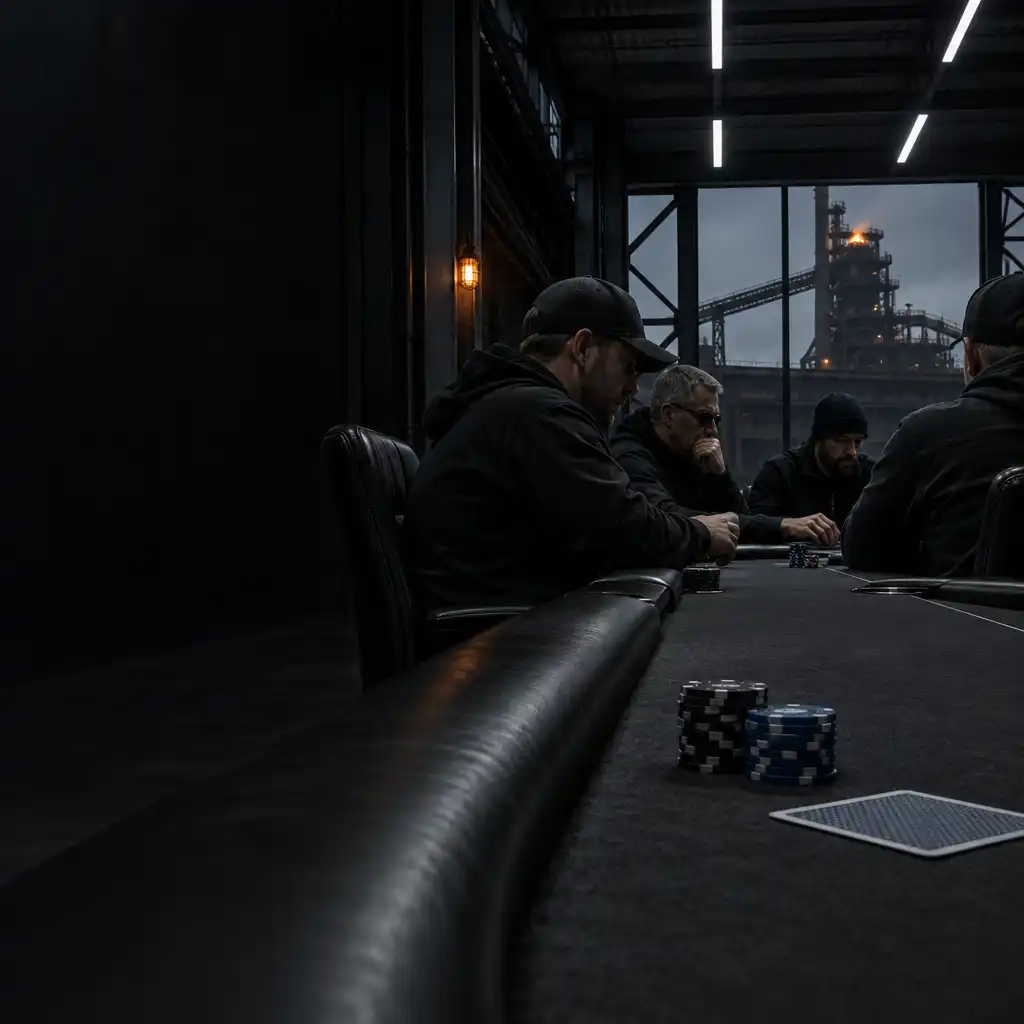
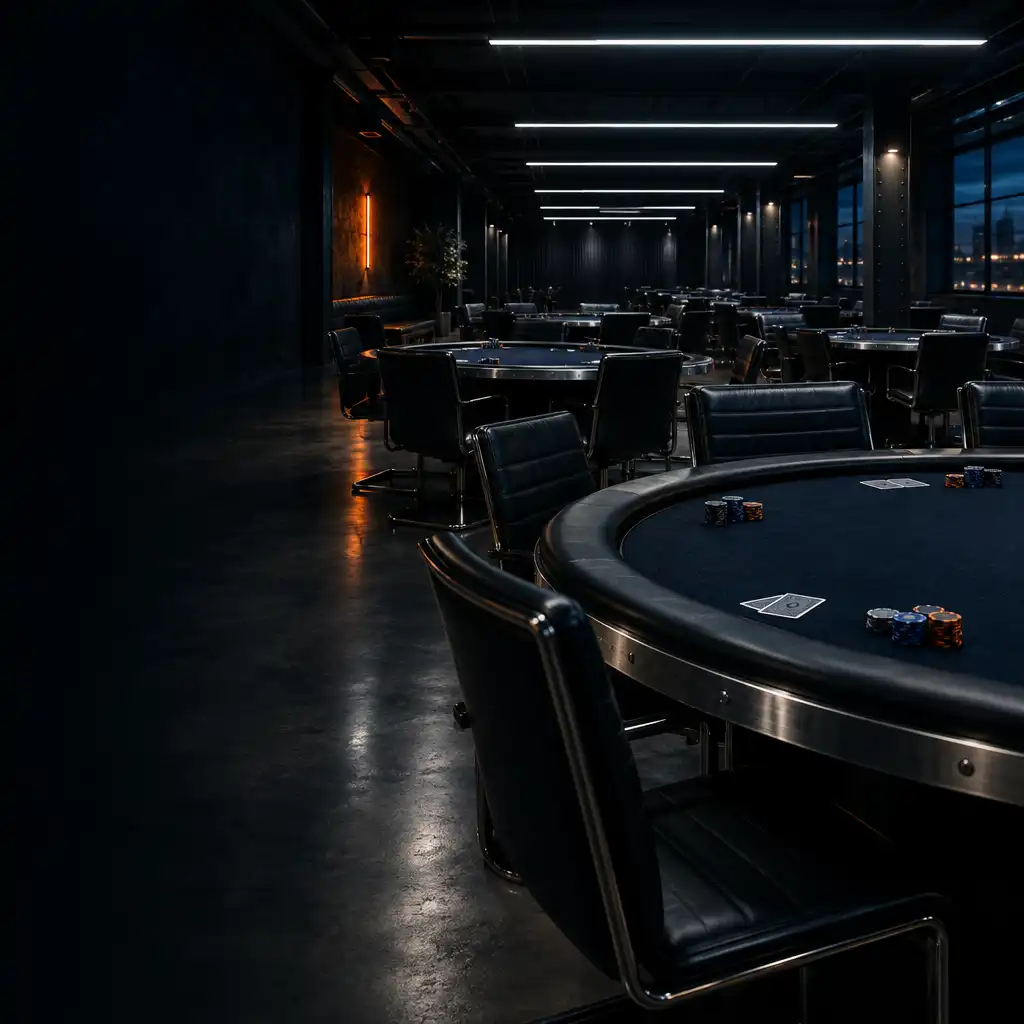
Card Anvil Whyalla is a physical, table-first venue where real tables, physical cards, chips and players in the room set the pace. This offline play venue keeps attention on the felt, player positions and shared table rhythm, giving face-to-face play a focused, practical setting rather than a luxury presentation.
Contact the venue for current session information.
02 / Material Read
The Table, Read as a Working Surface
Felt as the Working Field
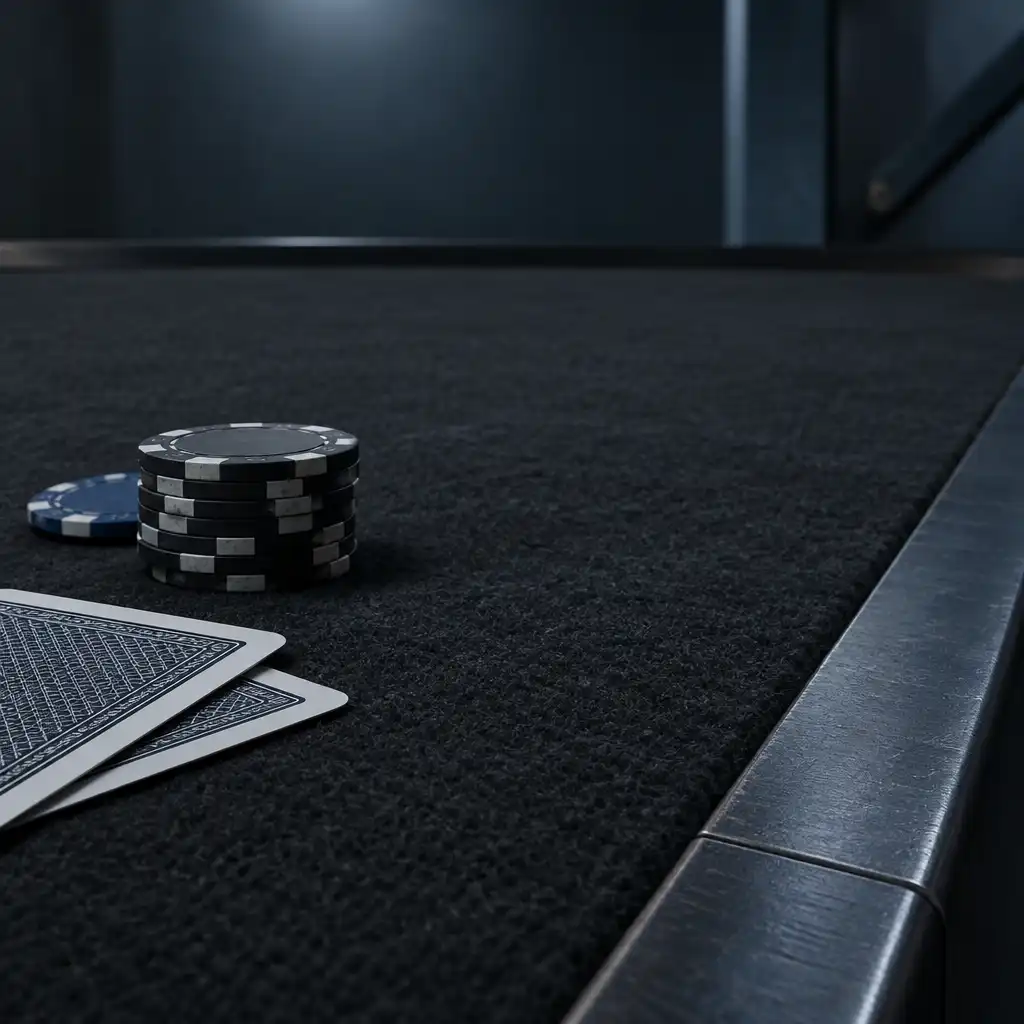
Dark felt forms the visual centre of the table. Its controlled, low-reflection appearance keeps physical cards, chips and hand movement easy to read in the shared field. Rather than competing for attention, the surface gives every position one clear centre of activity and supports a calm, deliberate table rhythm.
Rail / Seam / Edge
Steel-Edged Furniture
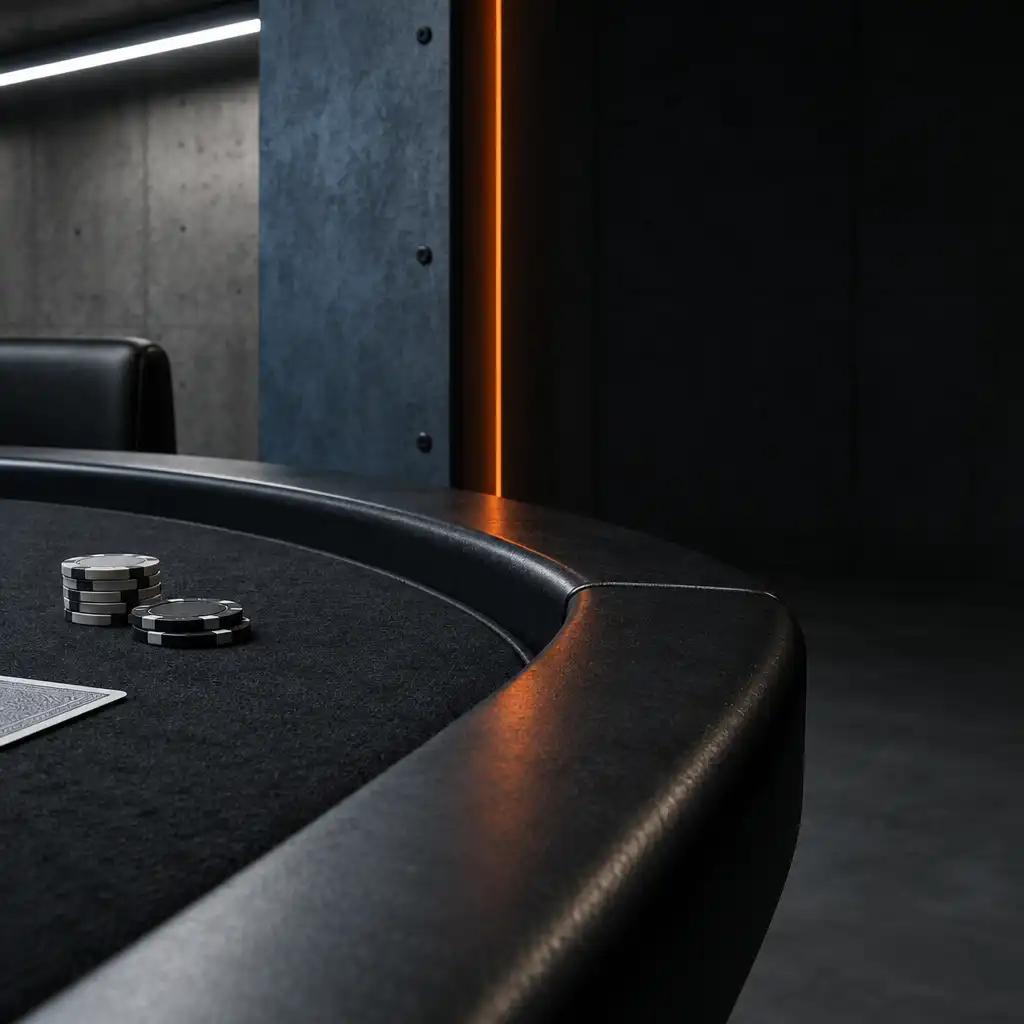
Blackened rails, cobalt-grey structure and deliberately engineered seams give the card room a hard-edged character. These details frame the table without turning it into ornament. The result is a visibly considered setting where edges, panel lines and furniture surfaces reinforce an industrial card-room atmosphere.
Card Field / Chip Space
Card and Chip Zones
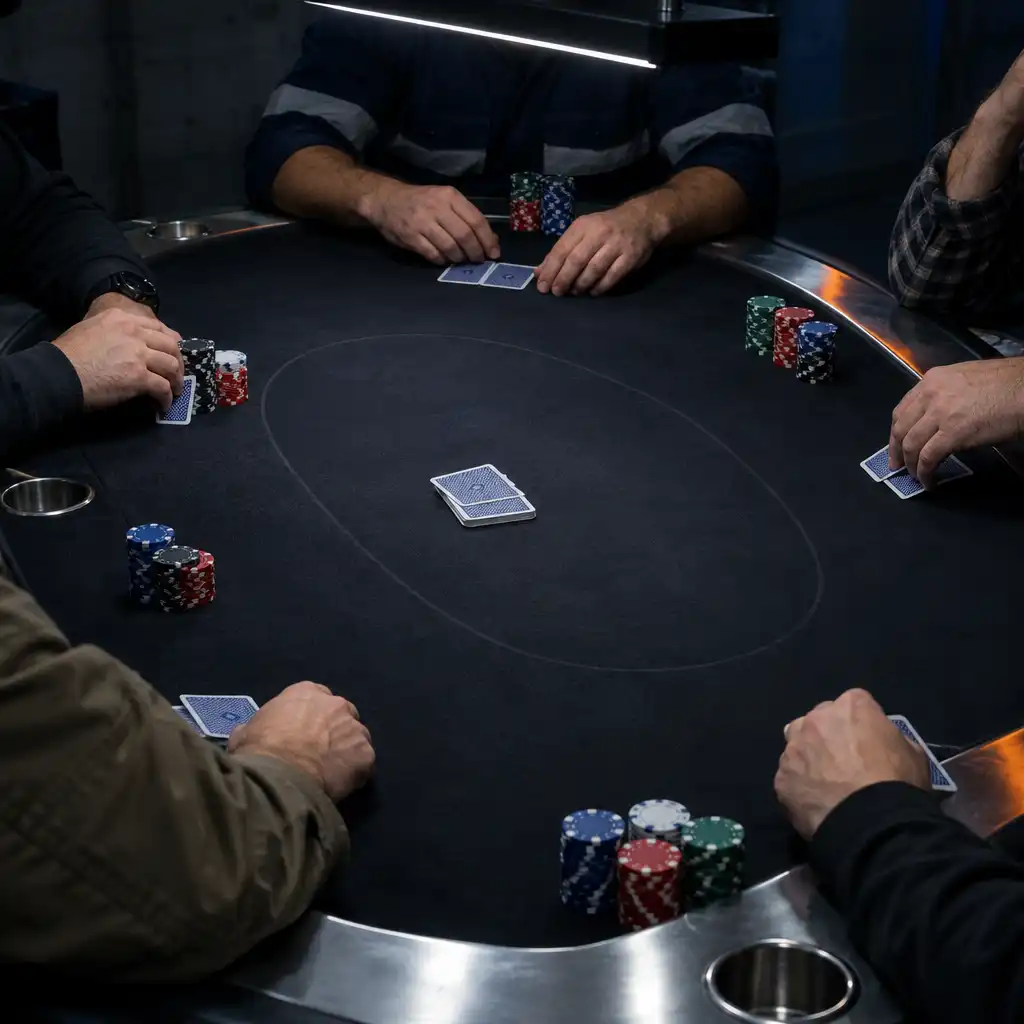
Cards and chips belong to a legible shared surface, with room for each player to recognise a personal working area. Distinct card areas and chip space support clean visual order around the felt, keeping the physical details of poker present without relying on procedural rules or technical diagrams.
02
Seat Positions Around the Action
For serious players, face-to-face play begins with being present at the table. Each seat is part of the same room, the same sightline and the same shared rhythm of cards, chips and conversation. The emphasis remains on a clear place in the action, not on isolated screen-based play.
03
In the Room
Built for Face-to-face play
Live play Whyalla is shaped by real people sharing the same table, not avatars or remote interfaces. At Card Anvil Whyalla, the physical setting keeps attention on the people across the felt and on the visible objects that make a table feel immediate: cards in hand, chips in place and a room with a common pace.
A Shared Line of Sight
Visible cards, chips, hands and table edges give the room a tangible sense of attention and turn-taking. Clear sightlines around the table allow the felt to remain the common point of reference, while the rail and surrounding room make physical presence part of the experience.
Room Over Screen
This is a card room Whyalla visitors can enter, sit in and enquire about, with the room itself forming part of the visit. If you are planning to attend, contact the venue for current session information rather than relying on assumed availability.
Circulation is considered as part of the card-room environment. People need to enter, move around and settle into the room without making the table area feel like a thoroughfare. That measured movement supports a calmer table atmosphere and keeps the focus on the shared surface rather than on constant pass-through activity.
A2
Seat Positions with Purpose
Seating is organised around the common table field, so every position belongs to the same face-to-face setting. General sightlines, card areas and chip space remain part of that shared picture, helping the room read as one physical environment without making claims about capacity or specifications.
A3
Task Lighting Over the Table
Controlled task lighting helps the felt, cards and active table area remain visually clear while the wider room keeps its darker industrial mood. Linear ceiling-light cues reinforce the room’s measured structure, giving table detail definition without relying on technical ratings or a fixed time-of-day program.
Table Contexts
A Table for the Occasion
Table / 01
Focused Live play Sessions
The tables are the central setting for live play sessions built around real cards, chips and shared table presence. If you are considering a visit, contact the venue for current session information and discuss what table use may suit your plans.
Organised poker nights are an enquiry-led reason to contact the venue when you want a physical room rather than online play. Details can be confirmed directly, allowing you to ask about current arrangements without assuming a fixed schedule, format or stake.
Groups and event organisers can ask about private events and table arrangements in the dedicated card-room environment. Start with the reason for your visit and the kind of gathering you are planning; current possibilities are discussed directly rather than presented as a fixed package.
Blackened steel, cobalt-grey structure, dark felt and linear light create a deliberate environment for poker rather than a decorative theatrical theme. The considered physical presentation can feel like premium poker in the sense that materials, edges and room atmosphere have been given attention, not as a price tier or promise of exclusivity.
Hard Edges, Clear Boundaries
Rails, seams and table outlines make the room legible and visually disciplined. Boundary lines establish an engineered rhythm across the setting, helping the table and its surrounding structure read clearly without suggesting regulatory or safety specifications.
Orange Reserved for Action
Furnace orange marks reservation, selected and operational moments. By keeping that colour for action rather than decoration, the room’s visual hierarchy stays controlled and visitors can quickly recognise where an enquiry or next step begins.
The Physical Detail Stays Central
Felt, card edges, chips and faces around the table remain the meaningful visual focus. For visitors looking for a poker-club atmosphere, the appeal is the shared physical room, without claiming club status or turning the venue into a themed venue.
Visit Sequence
From Seat to Room
01
Arrive with Your Enquiry Confirmed
Contact the venue to discuss current table availability or a planned group visit before relying on a particular session. Reservations and session information are handled through direct enquiry, keeping expectations clear from the start.
02
Take in the Room Before Play
Visible tables, rails, felt and lighting establish the immediate physical context for the visit. The room is designed to be read through its materials, edges and shared table fields rather than through screens or digital prompts.
03
Settle at the Table
The table is organised around cards, chip space, player positions and face-to-face interaction. Real tables bring these details into one common field, without asking visitors to treat the setting as strategy instruction.
04
Keep the Next Step Direct
Reserve a table, enquire about poker nights or ask about a private group according to your reason for visiting. Current details are confirmed through contact, not assumed from an automatic booking flow.
Use this form to ask about a table or a private event. Card Anvil Whyalla can provide current details directly, including poker-night and table-use information, so your plans are discussed with the venue rather than assumed online.
09
Clear Answers
Table Questions, Answered Clearly
Yes. Card Anvil Whyalla is built around real tables, physical cards, chips and people in the room. The experience is designed for face-to-face interaction in a dedicated industrial card-room environment, not as an online experience.
You can submit a reservation enquiry using the form on this page, or contact the venue by phone or email. Current table details are confirmed directly, so a submitted enquiry is not presented as an automatic or confirmed reservation.
Yes. Groups and event organisers can ask about private events and table arrangements. Explain what you are planning through the enquiry form or direct contact route, and discuss current possibilities with the venue without assuming capacity, packages or inclusions.
Card Anvil Whyalla is at 9-11 Darling Terrace, Whyalla SA 5600. Contact the venue for current visit and session information before planning your card-room visit.
Keep It Physical
Bring the Visit Back to the Table.
Serious players, groups and event organisers can contact Card Anvil Whyalla about a real-table visit, a poker night enquiry or a private event. Real cards · real tables · players in the room: the focus remains on a physical, face-to-face play setting in Whyalla.